How to price your room right: the 2026 landlord's guide
The right rent maximizes your yield by keeping vacancies to zero. It’s not about charging the absolute highest price — it’s about being the smartest, most competitive offer in your local market. Here is your step-by-step guide to nail the math.
The main points:
The right rent isn't the highest possible, but the one that maximizes yield while minimizing vacancy. Start with 10-15 comparable listings in your area, adjust based on location, private bathroom, square footage, furniture, and utilities included, then test the price in the first 7-10 days and tweak it based on demand. Remember: renting for €20-30 below market rate with zero vacancy almost always pays off more than squeezing out every last euro.

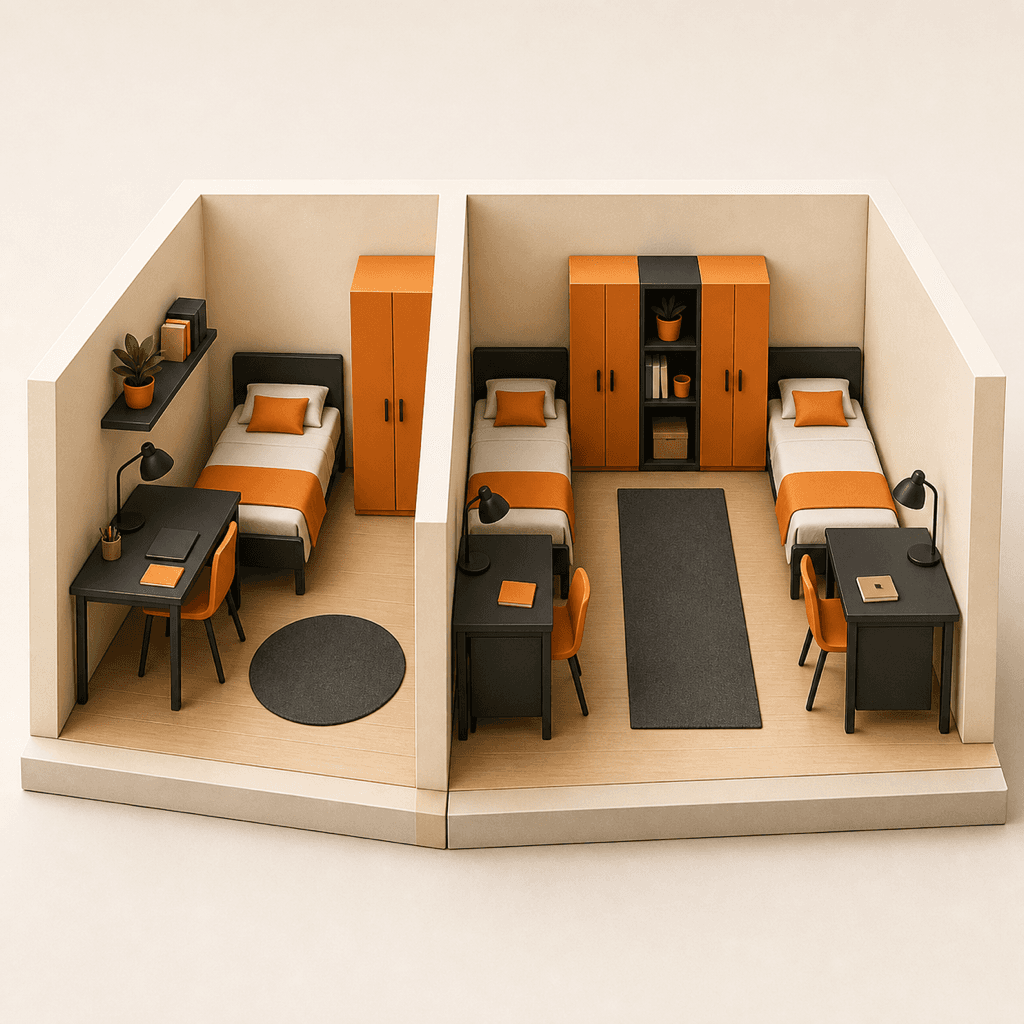
Illustration generated with AI
For illustrative purposes only; not a specific property.
How to price your room right: the formula that actually works
Setting your rent is one of the trickiest parts of being a landlord. Price it too high, and your room sits empty for weeks — costing you more than if you’d gone with a slightly cheaper rate. Price it too low, and you're leaving money on the table every month. Here is how to find that sweet spot.
The golden rule: the market decides
The right rent isn't based on what you spent on renovations or how much you paid for the property. It’s what actual students are willing to pay for a room with your features, in your area, right now.
This doesn’t mean selling yourself short — it means starting with real local market data and tweaking it based on your room's specific perks.
Step 1 — Study the local market
First step: run a quick reality check on similar offers in your neighborhood. Browse the main student housing platforms and look for rooms like yours — same style, same area, same bills included.
Find at least 10-15 matching offers and note down the prices. Work out the average, the minimum, and the maximum. This gives you your baseline market range.
Heads up: online listings aren't always up to date. A dirt-cheap room might already be rented but still online. A really overpriced one might have been sitting empty for weeks because of the price tag. Use the range as a guide, not absolute gospel.
Step 2 — Spot the value-add features
Some features justify charging a premium above the market average.
Killer location. Less than a 10-minute walk to the main campus or the nearest metro stop. Location is the ultimate price driver.
Private bathroom. An en-suite room usually fetches 20-30% more than one with a shared bathroom. It’s at the top of every student's wish list.
Large room. Over 15-18sqm, with plenty of space to study comfortably without feeling cramped.
Quality furniture. A brand-new mattress, a proper desk, a spacious wardrobe, and bright lighting. Great furniture can boost the value by 10-15% compared to tired-looking rooms.
Super-fast Wi-Fi. Practically a human right for students nowadays — if it's lightning-fast, it’s a massive selling point.
All bills included. Takes the stress out of monthly budgeting for students, meaning you can comfortably charge a premium.
Renovated apartment. A modern kitchen, fresh bathroom, and nice flooring show you care about your property — and students love that.
Step 3 — Factor in the downsides
On the flip side, some features mean you'll have to price your room slightly lower.
Ground floor flats with no view or facing a dark courtyard. Small rooms under 10sqm. Outdated or worn-out furniture. Sharing a bathroom with more than three people. Being more than 20-25 minutes away from campus or public transport. No washing machine or fully equipped kitchen. Autonomous heating with bills paid by the tenant.
Step 4 — Bills included or excluded?
A major decision is whether to bundle utilities into the rent or charge them separately. Both have pros and cons.
Going with bills included means a higher but predictable rent. The student knows exactly what they owe each month. As the landlord, you manage the utilities and wrap the average cost into the rent. This attracts students who love simplicity — often the most reliable ones with stable family backing.
To calculate this, take the market rent without bills and add an estimated share of monthly usage per student. In northern Italian cities, a sensible estimate for a room in a shared flat is €80-130 a month for power, gas, water, and internet.
Going with bills excluded makes your headline rent look lower, but monthly costs will vary. The student pays their own way or splits the bills with housemates. The perk for you? Zero risk of them leaving the heating on full blast with the windows open.
Step 5 — Test and tweak
Even with the best prep, the market has the final say. Put your listing up at your chosen price and see how it performs in the first 7-10 days.
If your inbox explodes instantly — think 5+ inquiries in a few days — your price might be a bit too low. You can probably bump it up slightly next time.
If you get radio silence or very few inquiries after 10 days, you’re likely overpriced. Drop it by €20-30 and see what happens.
If you get 2-3 solid inquiries in a week and get to pick from top-quality candidates, you've hit the sweet spot — high enough to maximize your return, competitive enough to avoid empty weeks.
The vacancy trap: the math landlords forget
Many landlords get obsessive about squeezing out the highest monthly rent, totally ignoring the cost of vacancy — those empty gap weeks between tenants.
Let's look at the numbers. A room rented at €550 a month for 12 months makes you €6,600 a year. That same room priced at €580 a month but sitting empty for just one month a year only makes €6,380 — less than the cheaper, fully occupied room.
Pricing your room €20-30 below the competition to guarantee zero vacancy is almost always more profitable than holding out for a top-dollar price that leaves your room empty.
Canone concordato: when capped rent pays off
If your property is in a high-density housing area (comune ad alta tensione abitativa) and you want to pay just 10% tax (cedolare secca), you'll need to stick to local rent caps (canone concordato).
In many cases, the tax savings — dropping from the standard rate to 10% — easily make up for a slightly lower rent. Do the math for your specific city before choosing.
How Stanza Semplice helps landlords
When you partner with Stanza Semplice, you tap straight into our expert local market knowledge. We know exactly what students are paying in your city's university hotspots, helping you price your rooms to perfection: maximum returns, zero empty days.
Get in touch today for a free valuation of your property.
Our tip
“
Here’s the math almost no landlord does: a room at €580 that sits empty for just one month a year actually makes less than one at €550 that's always occupied. It’s always better to go for a slightly lower rent to keep the room filled with great tenants. At the end of the day, the market sets the price, not your renovation costs.