From university digs to your first proper flat: making the move
Moving from college to your first job is a major milestone—exciting, but definitely a bit chaotic. Your budget shifts, your priorities change, and suddenly you're looking at a completely different rental market. This guide is here to help you navigate the transition like a pro.
The main points:
Once university is over, you lose access to student contracts but don't quite have the stability of a worker yet: it's a 6-to-18-month limbo that you shouldn't rush. Recalculate your location and budget based on your new job (the 30% of net income rule), don't force yourself into a solo apartment before your salary can actually support it, and look at post-grad co-living as a strategic move to build solid foundations, not as a defeat.

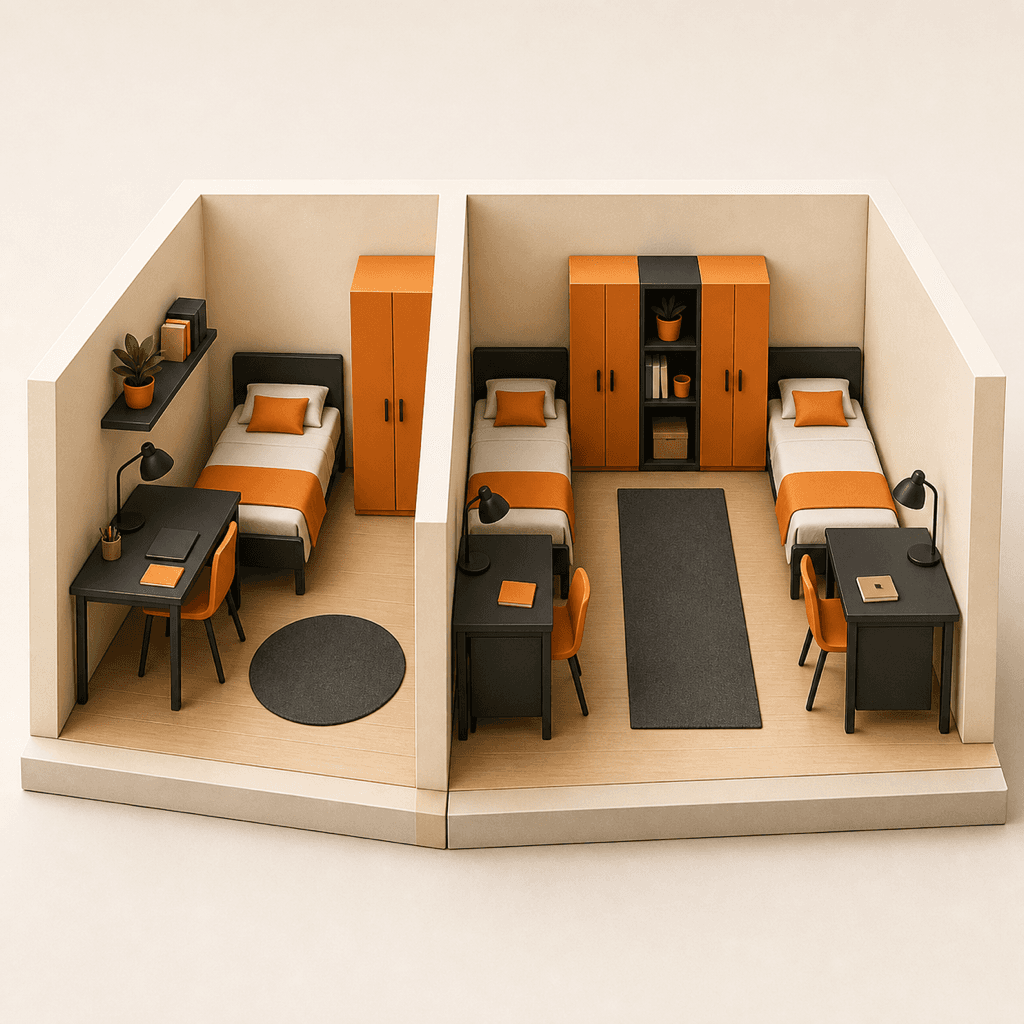
Illustration generated with AI
For illustrative purposes only; not a specific property.
From Student Digs to Drudge Work (Just Kidding): Your Guide to the Transition
University is done. You’ve landed a job—or you’re hunting hard. That college room you’ve called home for years just doesn’t fit this next chapter. It’s time to move up in the world. How do you pull off the transition without breaking the bank?
Why it’s trickier than it looks
Recent grads often find themselves in a catch-22. You’re no longer a student, so you lose access to student contracts and perks. But you’re not an established professional yet either—meaning you don't have the steady income history landlords demand for a standard lease.
This limbo usually lasts 6 to 18 months post-grad. It's a tricky phase. Navigating it smart is key to avoiding costly, rushed mistakes.
First things first: Are you actually in a rush?
Ask yourself honestly: do you really need to pack up right now, or is it just the psychological pressure of thinking "I'm a grown-up now, I must move"?
If your lease is still active, your job is local, and your current spot is decent, there’s no fire. Shacking up in your student room for a few extra months while you scout the right modern pad is always smarter than rushing into a bad flat.
On the other hand, if your student tenancy is expiring or you’re relocating for work, you need to move. Fast. Plan at least 2–3 months ahead.
Your new house-hunting checklist
A working grad’s priorites are different from a student’s. Let's break down what actually matters now.
Location vs. Commute. Forget the campus layout. You need to map out your daily route to the office. Every minute saved on the commute is a win.
Living space over sleeping space. Students live on the go—libraries, campuses, cafes, pubs. Workers spend evenings and weekends recharging. Your home space suddenly matters a whole lot more.
Contract stability. 6-month leases are fine when your life is temporary. Now you need a solid base—a 2 or 3-year contract in your new work city gives you peace of mind.
Privacy. You’re likely dreaming of a place of your own—no roommates, no awkward kitchen small talk. Totally fair. But keep your real budget in mind.
The budget reality check
First salaries are rarely fortune-making. Internships, entry-level roles, short-term contracts—the Italian market starts modest and uncertain.
With a net monthly income between €1,000 and €1,400—standard for Italian grads—the 30% rule for rent puts your budget at €300 to €420. In major Italian cities, that buys you a great room in a shared flat, not a solo apartment.
Solo flats only become financially stress-free once you hit a net income of €1,800+ in mid-sized cities, or €2,200 to €2,500+ in hubs like Milan or Rome.
Don’t bankrupt yourself for a studio before your salary can carry it. Rent pressure ruins your free time, your work focus, and your social life. Keep it comfortable.

Sharing flat: It's not a step backward
Many think staying in flatshares post-graduation means they haven't grown up. It's quite the opposite. It’s often the smartest financial move of your twenties.
Pro flatshares are different from wild student houses. Your flatmates are working mid-professionals too—regular hours, cleaner kitchens, and a lot more respect. The classic university dramas disappear.
Living in a shared flat for 1–2 years lets you save, build an emergency buffer, and step into your first solo flat with real cash behind you instead of living paycheck to paycheck.
Your new rental contract options
Once uni is over, you can no longer sign standard student leases. Your main options are the classic 4+4 free market lease, the 3+2 agreed rent lease, or transitional work contracts.
The transitional work contract (contratto transitorio per motivi di lavoro) is perfect if you’re moving to a new city for a trial period. It runs from 1 to 18 months, offers tax benefits to landlords (making them love it), and just requires proof of your temporary employment status.
The 3+2 agreed rent contract (canone concordato) is great for mid-term stability on capped rent, provided the town has a local territorial agreement active.
The 4+4 contract is the residential heavyweight—full freedom on pricing, long term. Perfect once you know you’re staying put.
The paperwork you need as a professional
No more university enrollment letters. Landlords now want to see your work contract or official job offer, your recent payslips (if you have them), your tax return or CU statement, and possibly still a guarantor if you're just starting out or on a probation period.
Once you have a permanent job contract (tempo indeterminato) and two or three payslips, finding a place gets incredibly easy—landlords love steady salaries.
The city dilemma: Follow the job or follow the lifestyle?
Where do you go? Where the best job is, or where you've always wanted to live?
Our advice? Put career growth first for the first 2–3 years. Fast-tracking your career early pays dividends for the next decade. Once you have a strong CV and negotiation power, you can live wherever you want.
Keep your options open. Don’t tie yourself down to one city too quickly. Short contracts and high mobility are standard and healthy at the start.
Prepping for your first solo flat
That first solo apartment—strictly yours—is a great milestone. But you have to prep for it.
Before you leap, ensure you have stable income that comfortably pays the monthly rent under the 30% rule. Build an emergency fund of 3–6 months. Have enough cash saved to cover the upfront costs: first month, security deposit (deposito cauzionale), and agency/moving fees.
Building this nest egg takes time—usually 2 to 4 years post-grad. Don't rush it. Moving into a solo place with a stable bank account is much sweeter than doing it early and counting coins for pasta.
We’ve got you covered with Stanza Semplice
Stanza Semplice isn’t just for undergrads. We open our doors to recent grads and young professionals looking for premium, bills-included rooms without the hassle of huge deposits. It’s the perfect landing pad while you figure out your next big move without committing to long, expensive leases.
Stepping into your next chapter? Find a room in one of our cities, contact us, and let's find your perfect spot.
Our tip
“
Your first salary will rarely cover a studio apartment of your own, and I've seen too many recent graduates burn through their savings just to have one right away. Keep sharing a flat for another year, save up 3 to 6 months of living expenses, and if you move to a new city, use a temporary employment contract: it's flexible and landlords love it. You'll get your independence with much more peace of mind.