Student tenant rights & duties: all you need to know before you sign
Most students sign a lease without really knowing their rights and duties. But knowing them is key to a stress-free stay and keeping yourself covered. Here is everything you need to know in our quick guide.
The main points:
Signing a lease is a legal agreement with responsibilities for both sides. As a tenant, you have the right to a liveable home, undisturbed peace, a registered contract, the return of your deposit, and payment receipts. In return, your job is to pay on time, respect the property and house rules, report any issues, and avoid unauthorized subletting. Always keep your registered lease, bank transfers, and check-in photos handy: they are your best protection.

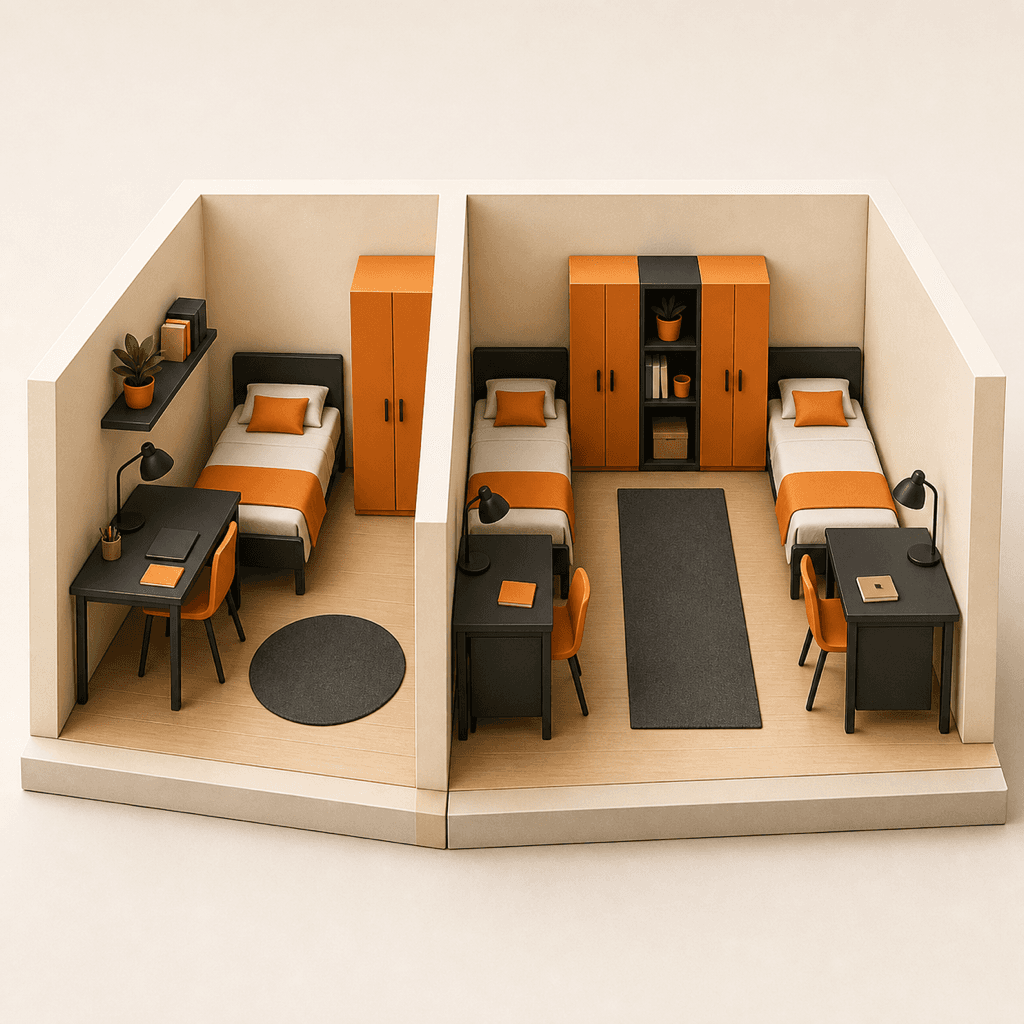
Illustration generated with AI
For illustrative purposes only; not a specific property.
Student rights and duties: the ultimate tenant guide
Signing a rental agreement is a legal act with real-life implications. Many students sign without really knowing what they are entitled to expect and what they are required to do. Understanding both sides of the coin is essential to live stress-free during your university years and protect yourself if issues arise. Here is everything you need to know.
Your rights as a student tenant
The right to a livable home
By law, landlords must hand over a property in good, livable condition — working heat and water, a safe structure, and no issues that make the space unhealthy. If your room has structural defects, severe dampness, broken utilities, or any other issues affecting its livability, you have the right to demand that your landlord fixes them.
This right also covers issues that pop up during your stay — not just when you move in. If the heating breaks in January, the landlord is required to repair it within a reasonable timeframe.
The right to peace and quiet
Once you sign the contract, the place is yours for the agreed duration. The landlord cannot enter your room without your prior consent — except in an emergency. They cannot drop by whenever they feel like it, turn up without warning, or interfere with your peaceful enjoyment of the space.
If a landlord violates this rule — for example, by entering when you are away without permission — they are breaching the contract, and you can hold them legally accountable.
The right to a registered contract
Your rental agreement must be registered with the Italian Revenue Agency (Agenzia delle Entrate) within 30 days of signing. This is the landlord's responsibility — but it matters to you too, because an unregistered contract won't protect you in a legal dispute. You have the right to request a copy of the registered contract and verify that it has been filed.
The right to get your deposit back
If you paid a security deposit, you are entitled to get it back after your contract ends, within the agreed terms — usually a few months after handing back the keys. Landlords can only keep the deposit for damage that goes beyond normal wear and tear or for unpaid rent. They cannot hold onto it for ordinary wear — think micro-scratches on furniture, minor scuffs, or normal aging of materials.
If your landlord doesn't return your deposit without documented proof of damage, you can formally dispute it.
The right to proof of payment
For every rent payment you make, you are entitled to a receipt or digital proof of payment. Always pay via bank transfer — never cash — so you always have a paper trail. The transfer is your protection against any future disputes.
Your duties as a student tenant
Pay your rent on time
This is your main and most important duty. Rent must be paid by the date specified in the contract — usually within the first 5 to 10 days of the month. An occasional delay can be managed by communicating with the landlord beforehand. Systematic late payments are a serious breach of contract that can lead to eviction.
If you expect difficulties in a specific month, talk to your landlord as soon as possible — before the deadline, not after. Honest, upfront communication solves most situations before they turn into conflicts.
Respect the property and shared areas
You must keep your room in good condition and return it in the same state you found it when the contract ends — minus normal wear and tear. This means avoiding damage to walls, furniture, and systems. Minor, accidental damage happens — the key is to let the landlord know and handle it properly.
Shared spaces — kitchen, bathroom, hallway — are a collective responsibility shared with your housemates. Looking after them is just as much plan of your contract obligations as keeping your own room clean.
Follow the building rules
If your apartment is part of a condo building, the building rules also apply to you. Quiet hours, rules for common areas, waste disposal guidelines — these are rules you need to follow just like any other resident.
Report issues promptly
If something breaks or goes wrong in the property, you have a duty to let the landlord know straight away — don't wait for things to get worse. An unreported water leak that ends up causing structural damage could hold you liable for the cost of repairs.
No unauthorized subletting
You cannot sublet your room to anyone else without your landlord's explicit consent. Doing so without approval is a major breach of contract and can get you evicted.
Respect cancellation notice periods
If you want to move out before your contract naturally ends, you must respect the notice period required — generally 30 to 60 days. Leaving without giving enough notice can mean you'll have to pay a penalty fee.
What to do if your landlord breaks the rules
Not all landlords play fair. If you find yourself in a tricky situation — a landlord who won't fix structural issues, enters without asking, or won't return your deposit — you have concrete ways to protect yourself.
The first step is always written communication — send an email or message documenting the problem and asking for a solution within a reasonable timeframe. Written proof is key because it leaves a paper trail.
If direct communication doesn't solve it, you can reach out to student tenant associations present in almost all Italian university towns — like Sunia, Unione Inquilini, or Sicet. They offer advice and support specifically to students.
For more serious disputes, you can opt for mandatory mediation or, as a last resort, legal action. Times and costs vary significantly — which is why clear, proactive communication and keeping accurate records are so important.
Documents you must always keep
Always keep these essentials throughout your stay and even after you move out: a copy of the registered contract, receipts or bank transfer confirmations of all payments, the key handover document with the property conditions (if you received one), all written exchanges with the landlord, and photos of your room when you moved in to document its starting condition.
These documents are your shield in any future dispute.
At Stanza Semplice, your rights are respected
With Stanza Semplice, contracts are fully registered, transparent, and always comply with Italian law. Our team is always here for anything you need during your stay — from maintenance requests to contract queries.
You'll never have to wonder if you are getting what you paid for. It's built right into our service.
Our tip
“
Always pay by bank transfer and keep everything in writing, even messages with the landlord: if a dispute arises, a paper trail is worth a thousand words. And take photos of the room as soon as you step inside, before you even unpack: you will avoid any arguments over the security deposit when you move out.