Work & study: how to find a room on a student budget
More and more students are working while they study. Balancing both takes serious organization, and finding the right place to live is a huge part of the equation. This guide gives you real, practical strategies to find a room on a budget—without compromising on quality or location.
The main points:
About 40% of Italian university students work while studying, juggling tight budgets and even tighter schedules. The winning strategy starts with location — pick a room positioned perfectly between your university and your job. Then, look for smart ways to optimize your budget: think double rooms, bills included, great public transport links, and a transitional student contract (valid even if you work). Never sacrifice location just to save a few euros: time wasted commuting costs way more.

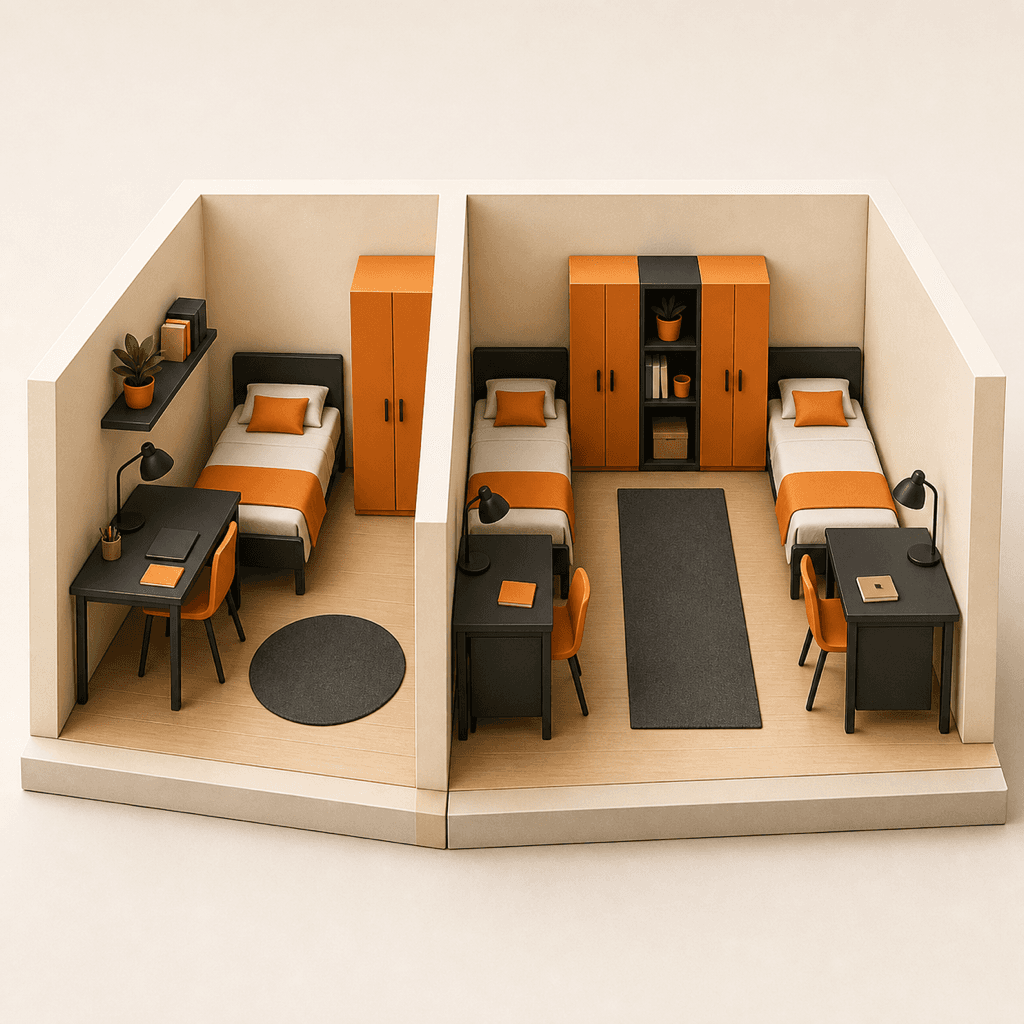
Illustration generated with AI
For illustrative purposes only; not a specific property.
Working and studying: how to find a place on a tight budget
You’re one of the many university students in Italy juggling classes and a job. Mornings in lecture halls, afternoons at work, nights over textbooks. Time is your scarcest resource and, despite working, your budget is often tight. Finding the right place in this situation takes a clear strategy. Here it is.
The student-worker reality
In Italy, around 40% of university students work while studying—whether part-time, casual gigs, or structured contracts. The reasons vary: financial need, wanting independence, or getting a head start on work experience before graduating.
This lifestyle comes with specific housing needs. Your budget might be slightly higher than a student relying solely on family, but your time and convenience needs are much more urgent. You can't afford to waste hours commuting or live in a place that adds daily stress.
Location, location, location
For a student-worker, where you live is even more critical than for full-time students. You have to get to both uni and work—so keeping total travel time to a minimum is a game-changer.
Before house hunting, map out your daily routes. Where are your classrooms? Where is your job? What’s the easiest way to get between them? Your ideal room should be along this path or in a spot that cuts down your total commute.
Saving 15 minutes of travel time every day is worth far more than saving a few euros on rent—add it up over a year, and that saved time is massive.
How to stretch your budget
With a part-time income—often between €400 and €700 net a month—and maybe some family help, a student-worker's typical rent budget sits between €350 and €550 in mid-sized cities, and up to €650 in bigger cities.
To get the best value without cutting corners, try these strategies.
Shared room instead of a single. Shared rooms are typically 30-40% cheaper than singles. If you get along with your roommate and share similar habits—crucial if you work irregular hours—it’s a highly budget-friendly move.
All-inclusive bills. A room with utilities included means no monthly surprises and zero admin hassle. If you don't have time to chase bills and split costs, the predictability of a fixed monthly price is worth every penny.
Smart spots near public transport. A room that's a 10-minute bus ride from campus can cost significantly less than one that's a 5-minute walk—and the extra travel time is tiny.
Student contracts (contratto transitorio). If you qualify for a student-use transitional contract, use it. The tax breaks for landlords often translate into more affordable market rates for you.
Time management: make your home your ally
For a student-worker, a room is more than just a place to sleep—it’s the headquarters of your daily routine. Features that might be optional for others are absolute priorities for you.
The desk. You need to be able to study at home, day or night. A comfortable, well-lit desk isn't a luxury—it's essential for getting things done.
Internet connection. Fast and stable. When you study and work, a slow connection is a double waste of time.
The kitchen. Cooking at home instead of eating out can easily save you €200-400 a month. A fully equipped, functional kitchen is an investment in your health and your wallet.
Housemates with compatible schedules. This is the hardest factor to control, but one of the most important. If you get home late from work and your housemates go to bed early, or vice versa, friction is inevitable. Talk about schedules before signing.
Your contractual rights as a student-worker
As a university student, you still have access to the student-use transitional contract, regardless of whether you work. The requirement is your university enrolment, not a lack of income.
This is key because student contracts offer specific perks—flexible duration, tax advantages—that remain available as long as you are enrolled.
Handling times of financial stress
Part-time work doesn't always guarantee a stable income. Seasonal jobs, reduced shifts, or study breaks mean a working student's income can fluctuate from month to month.
Before signing a lease, make sure you can cover rent even during months when your work income drops or stops—either with family backup or some savings set aside. Keeping rent payments consistent is essential for a good relationship with your landlord and your own peace of mind.
The best piece of advice
Don't compromise on location just to save a few coins. For a student-worker, time is money. A cheaper room that is far from uni and work can cost you hours every day—and that lost time for studying, working, or sleeping is worth way more than a slight rent discount.
With Stanza Semplice
Stanza Semplice rooms offer all-inclusive bills and strategic locations near major universities, making them perfect for working students. No hidden costs, no bureaucracy to deal with—so you can focus on what really matters.
Find your room and set yourself up for a stress-free university year.
Our tip
“
As a working student, your most valuable asset isn't money, it's time. Before you look at prices, map out your university-to-work commute and find a room along that route. Saving fifteen minutes every day is worth much more than saving €30 on a distant room. And talk schedules with your future flatmates before signing, or conflicts are guaranteed.